
GitHub Is Where AI Natives Live
How my first 2-hour AI Product Strategy Class started in GitHub and ended with a prototype

Most jobs I apply for have overwhelming job descriptions that sound like the work of 10 people, not one.
I constantly remind myself that I wouldn’t be expected to do everything in the first week, but sometimes, I want a solid head start on what processes I could potentially automate and prototype to make the job more manageable.
One of the jobs I’m waiting to hear back on had three bullets which got me thinking about creating an AI Opportunity Management system from an AI native perspective and process:
Leads the vision and roadmap for our internal AI tools and experiences, balancing usability, governance, and measurable impact.
Translates AI concepts into practical business solutions and product requirements that drive value across teams.
Builds and maintains a portfolio of AI pilot programs across functions— establish goals, success metrics, and clear scale/sunset criteria.
Today, I started a month-long AI Product Strategy certification with Product School and wanted to share my first steps as an AI PM with an AI native strategy lens solving for these three bullets.
Read more about my previous experience managing an AI Portfolio to understand why I had an automate and prototype reaction.

Make a Bet And Go Straight to GitHub
I always thought that engineering work lived in GitHub. The rest of us in Program, Product and Portfolio struggled to use Product Lifecycle Management (PLM) tools built for waterfall, but supposedly still useful for Agile. Or maybe we were forced to align with where the business worked in Smartsheets and AirTable.
When our instructor, a Senior Director for Salesforce agents went straight to GitHub after the usual introductions and class expectations, I was slightly freaking out, in my very calm way. Kind of like too much coffee vibes.
Shifting My Mental Model
So months ago, in my AI Prototyping class with Product School, we gave Lovable a PRD to build a prototype. Apparently, that’s like mailing a letter now. I’m not sure.
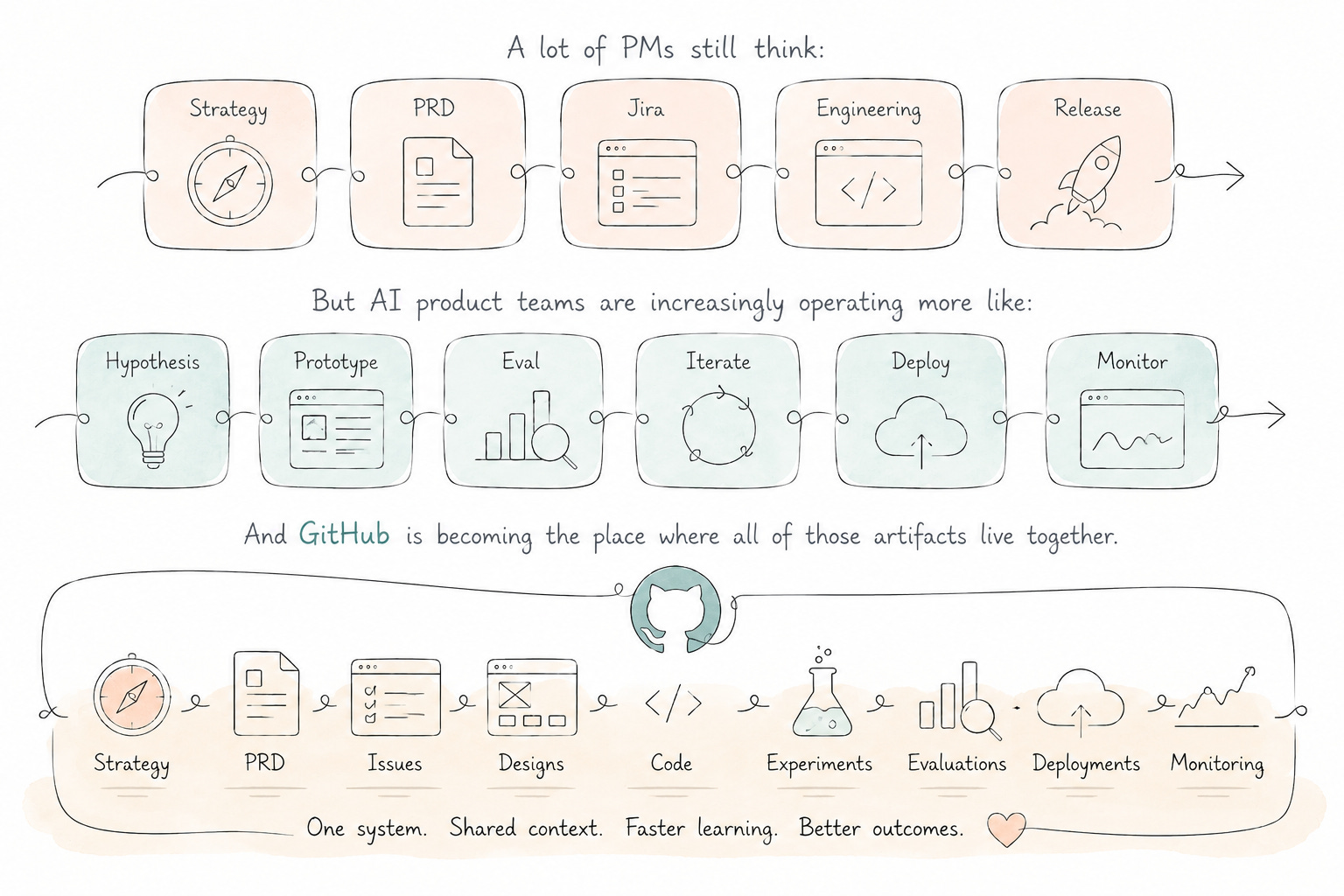
AI Product Strategy starts in GitHub where the artifacts support looking at a hypothesis or bet and immediately prototyping it after answering a few basic, but very thoughtful questions.
Two Strategy Documents and One Prototype
AI PMs are focused on building and shipping AI capabilities.
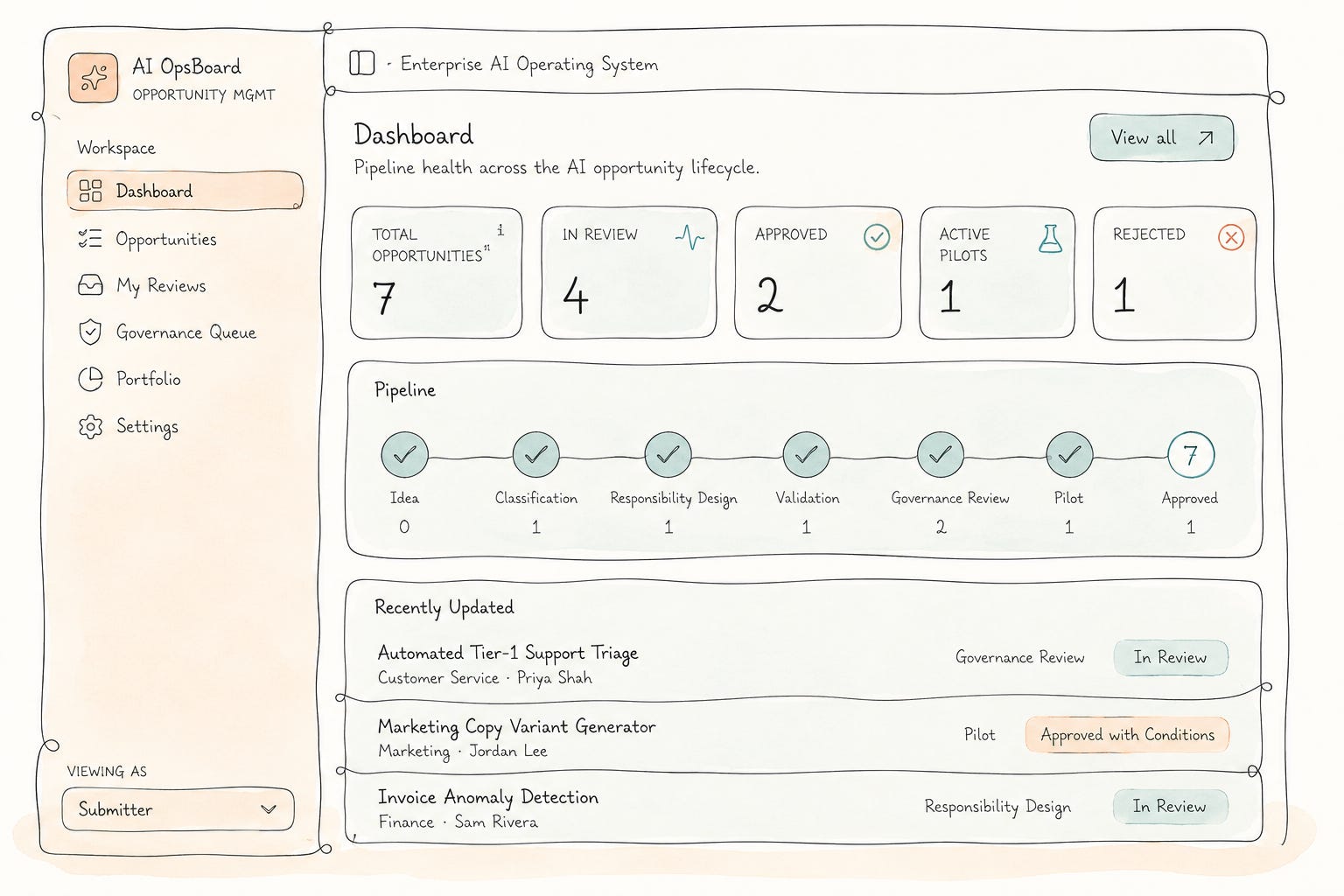
My prototype focuses on what happens before a team commits to building one.
It's a structured intake and evaluation workflow that helps organizations determine which AI opportunities are worth pursuing, what evidence is needed, what risks exist, and who remains accountable before resources are invested.
Product teams have Jira for delivery, roadmaps for prioritization, and PRDs for requirements (I think). But many organizations don't have a repeatable process for evaluating AI opportunities before they enter the roadmap. This prototype fills that gap.
So I added quite a bit more detail to my prototype prompt for Lovable because for me, the value was in testing out the workflow.
But essentially, the total artifact score is the same - 2 documents, plus a prototype:
Artifact 1: Assessment of the vulnerability of what I’m prototyping to see if it’s worth the effort with specific kill criteria.
Strategic thinking time: 15min
Artifact 2: Context on the prototype plus a link to the prototype.
I added success criteria for my hypothesis — I couldn’t help it.
Prototyping Time: 15min
Planning Has More Rhythm
As a Technical Program Manager in this product class, my ears perked up when the instructor asked the group about their planning cycle. My siren call. I am so drawn to those rocks.
The usual suspects of Annual Strategy and Quarterly Direction showed up, but for agents, the cadence was monthly capability bets, bi-weekly releases, and lots of experiments. Tokens anyone?
I shouldn’t make jokes, but it’s just such a different perspective than I was used to or expected when I decided to start looking through an AI native lens to do my work.
What’s Next
Today was the first day of class. I’ve got two a week for the next month and will keep sharing what I noticed as a not-really AI native and a program manager learning the ways of product management.
If you find that exciting, you should consider subscribing and leaving a comment about what you’re up to.
Details on the Build
For my paid subscribers, I’ll be sharing more detail on the technical side of my AI operations strategy work for this class.
I’ve been thinking about the workflow for a few weeks and even posting responses from ChatGPT to Claude and vice versa to really test out the thinking.
But today I built the prototype, and that feels like more progress than most of the “thinking” I’ve been doing with AI.
Honestly, I was likely stalling because I didn’t know how to technically get started. My prototype is still not production, but with a testable workflow, I’ll likely move quicker to any decisions on what to build to make this a real thing.
Keep reading with a 7-day free trial
Subscribe to Empathetic AI Lab to keep reading this post and get 7 days of free access to the full post archives.